Fernand Léger
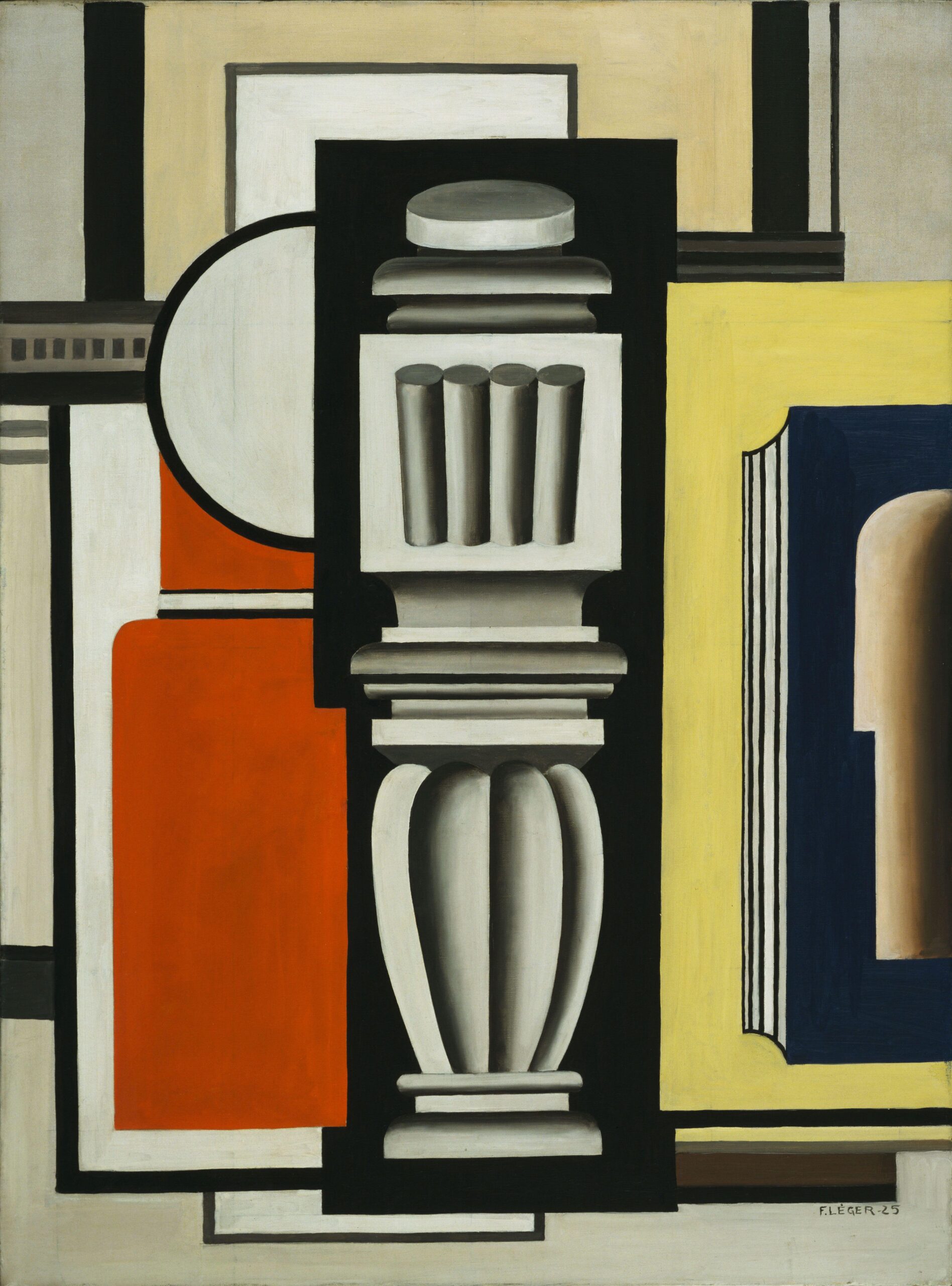
Fernand Léger was born in 1881 in Normandy, France, and became a major figure in modern art and early Cubism. Trained initially as an architectural draftsman, he brought a strong sense of structure and form to his painting. Léger developed a distinctive style marked by bold colors, simplified shapes, and mechanical rhythms. His work reflects a fascination with modern life, industry, and the visual language of machines.
Although associated with Cubism, Léger moved away from its muted palette toward a more dynamic and accessible approach. He believed art should engage with contemporary society and be understandable to a wide audience. Léger also worked in film, theater design, and public art. After World War II, his work took on a more human and optimistic tone. He died in 1955. Léger’s legacy lies in his fusion of modern abstraction with popular imagery and everyday life.