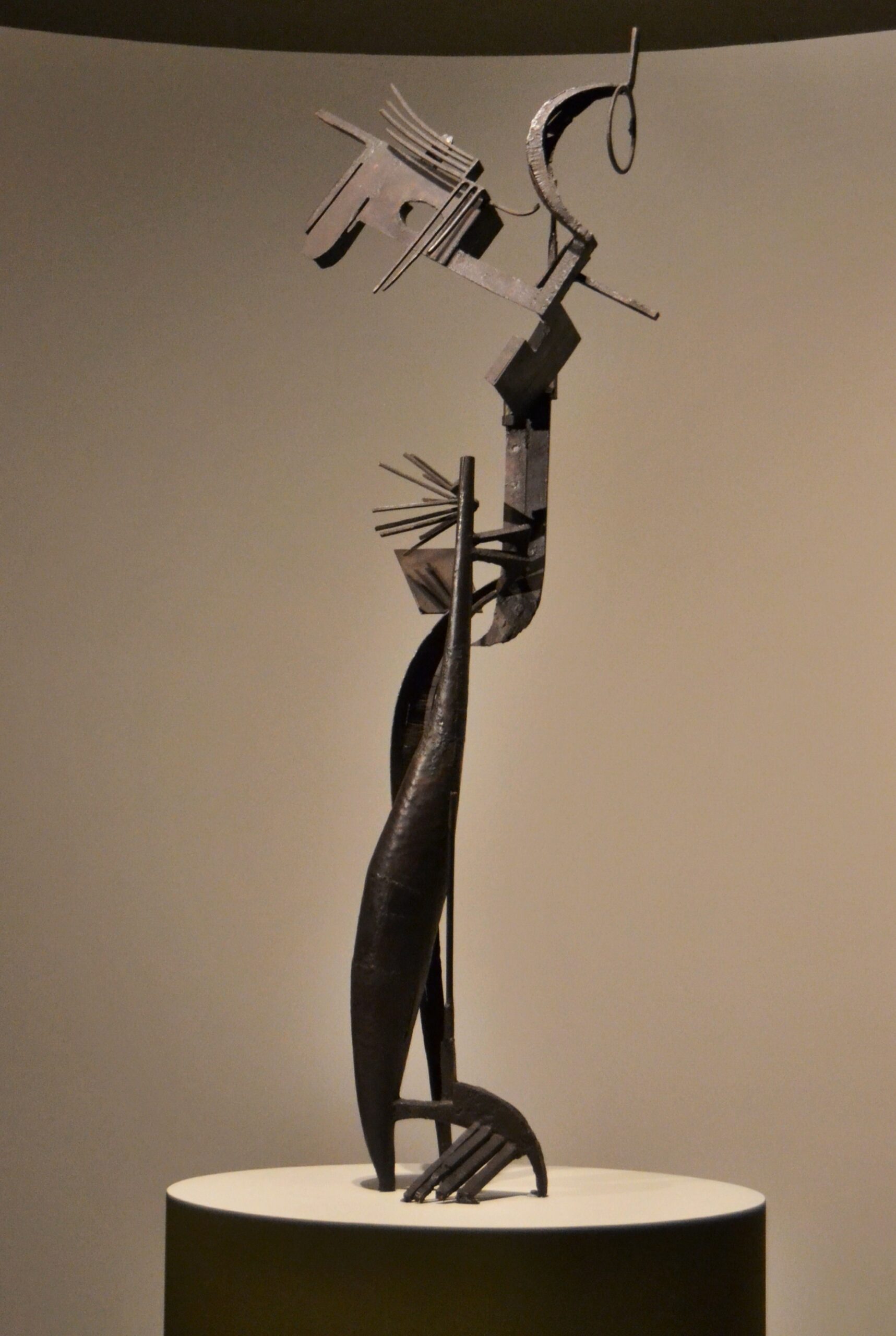
Julio González
Julio González was born in Barcelona in 1876 and became one of the most influential sculptors of the 20th century. He was trained as a metalworker and goldsmith, skills that later shaped his innovative sculptural practice. After moving to Paris, González became closely connected with the avant-garde and developed friendships with artists such as Pablo Picasso. He played a crucial role in transforming sculpture through the use of welded iron and industrial materials.
Julio González’s sketches for iron works are widely considered works of art in their own right, not just preparatory material. González treated drawing as an essential part of his sculptural thinking. His sketches were not simple technical plans. They functioned as explorations of line, space, balance, and tension, the same concerns that define his sculptures. Because he approached metal as drawing in space, his works on paper often mirror the final sculptures very closely in spirit and structure.
Many of these sketches combine artistic freedom with structural logic. Some look almost abstract, made of sparse, decisive lines that suggest volume without enclosing it. Others include notes about welding, joints, or material stress, showing how artistic vision and craftsmanship were inseparable for him.
González treated metal as a medium for drawing in space rather than solid mass. His sculptures emphasize line, openness, and structural tension. Through collaboration with Picasso in the late 1920s, he helped pioneer modern metal sculpture. González’s work combines abstraction with poetic and symbolic qualities. Despite limited recognition during his lifetime, his influence grew steadily after his death. Julio González died in 1942. Today, he is regarded as a foundational figure in modern sculpture and abstract form.